
Friday, February 27, 2009



Dow ....7,062.93 ....-119.15 (-1.66%)
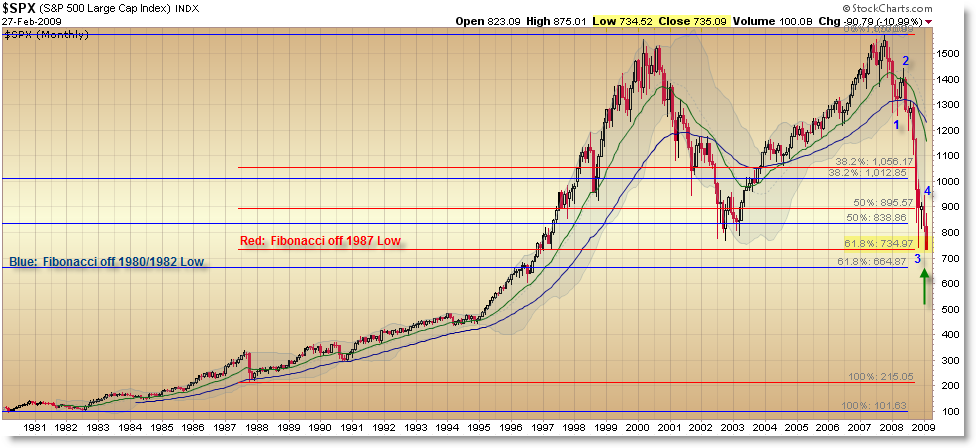
S&P 500 ...735.09 ...-17.74 (-2.36%)
Nasdaq ....1,377.84 ..-13.63 (-0.98%)
US Economy: GDP Shrinks 6.2%, More Than Estimated
California's unemployment rate above 10 percent
Wall Street slides after Citigroup-government deal
Economy shrinks at fastest pace in 26 years
Ruger (RGR) posts huge gains after 2008 Earnings
The election of President Obama and a Democratically controlled Congress has been a boon to U.S. handgun makers, with sales of one pistol manufacturer climbing enough that an analyst Wednesday upgraded its stock to "Strong Buy" from "Accumulate."
CL King & Assoc. analyst Jim Barrett upgraded shares of Sturm, Ruger & Co. after the Southport, Conn.-based company reported its firearm revenue soared 81 percent in the fourth quarter.
"We are raising our rating, recognizing that sales are benefiting from what is clearly a one-time surge in gun sales due to the arrival of the new Democratic administration," Barrett said.
Thursday, February 26, 2009
Dow ....7,182.08 ....-88.81 (-1.22%)
S&P 500 ...752.83 ...-12.07 (-1.58%)
Nasdaq ....1,391.47 ...-33.96 .(-2.38%)
New home sales plunge 10.2% to record low
US jobless claims hit 26-year high
Durable Goods Orders Drop for Sixth Consecutive Month
Americans receiving unemployment top 5 million
Weak health care stocks drag Wall Street lower
Obama budget has new $750B bank rescue contingency
S&P 500 ...752.83 ...-12.07 (-1.58%)
Nasdaq ....1,391.47 ...-33.96 .(-2.38%)
New home sales plunge 10.2% to record low
US jobless claims hit 26-year high
Durable Goods Orders Drop for Sixth Consecutive Month
Americans receiving unemployment top 5 million
Weak health care stocks drag Wall Street lower
Obama budget has new $750B bank rescue contingency
Wednesday, February 25, 2009
Dow ....7,270.89 .....-80.05 (-1.09%)
S&P 500 ....764.90 ...-8.24 (-1.07%)
Nasdaq ....1,425.43 ...-16.40 (-1.14%)
US home sales, inventories plummet in Jan.
Treasury Releases Details of 'Stress Tests' for Bailed-Out Banks
Stocks end down as week's back-and-forth continues
Gov't says 'mass layoffs' soared in January
S&P 500 ....764.90 ...-8.24 (-1.07%)
Nasdaq ....1,425.43 ...-16.40 (-1.14%)
US home sales, inventories plummet in Jan.
Treasury Releases Details of 'Stress Tests' for Bailed-Out Banks
Stocks end down as week's back-and-forth continues
Gov't says 'mass layoffs' soared in January
Tuesday, February 24, 2009
Dow ....7,350.94 ....+236.16 (3.32%)
S&P 500 ...773.14 ..+29.81 .(4.01%)
Nasdaq ....1,441.83 ....+54.11 (3.90%)
Stocks Soar On Bernanke Bank Talk
Home Prices Post Biggest Drop in 21 Years
By Prashant Gopal The S&P/Case-Shiller US National Home Price Index plunged 18.2% during the final quarter of 2008, the biggest annual decline in the closely watched index's 21-year history.
Home Depot, Nordstrom, Macy’s Earnings Beat Estimates
S&P 500 ...773.14 ..+29.81 .(4.01%)
Nasdaq ....1,441.83 ....+54.11 (3.90%)
Stocks Soar On Bernanke Bank Talk
Home Prices Post Biggest Drop in 21 Years
By Prashant Gopal The S&P/Case-Shiller US National Home Price Index plunged 18.2% during the final quarter of 2008, the biggest annual decline in the closely watched index's 21-year history.
Home Depot, Nordstrom, Macy’s Earnings Beat Estimates
Monday, February 23, 2009
Dow .....7,114.78 .....-250.89 (-3.41%)
S&P 500 ...743.33 ..-26.72 .(-3.47%)
Nasdaq ....1,387.72 ...-53.51 (-3.71%)
US Stocks Fall, Sending Market to Its Lowest Close Since 1997
Regulators pledge to shore up financial system
Oil prices tumble below $39 despite OPEC cuts
S&P 500 ...743.33 ..-26.72 .(-3.47%)
Nasdaq ....1,387.72 ...-53.51 (-3.71%)
US Stocks Fall, Sending Market to Its Lowest Close Since 1997
Regulators pledge to shore up financial system
Oil prices tumble below $39 despite OPEC cuts
Sunday, February 22, 2009
Period ................................Market Decline.........DJIA Change 1 Year...........DJIA Change 2 Years After
............................................................................After Decline..................... Decline (cumulative)
Dec. 1961 -- June 1962........(27.1%)......................32.3%................................55.1%
Feb. 1966 -- May 1970........(36.6%)......................43.6% .............................. 53.9%
Jan. 1973 -- Dec. 1974.........(45.1%) .....................42.2% ..............................66.5%
Sep. 1976 -- Feb. 1978 ........(26.9%)..................... 9% ................................. 15.1%
Aug. 1987 -- Oct. 1987.........(36.1%).................... 22.9%............................... 54.3%
July 1990 -- Oct. 1990.......... (21.2%) .................. 26.2% .............................. 32.6%
Jan. 2000 -- March 2003 .....(35.8%) .................. 34.6% .............................. 43.2%
Average................................(32.7%)................... 29.4%................................ 45.8%
Oct. 2007 -- Dec. 2008 ........(46.7%).................... ... ? ...................................... ?
------------------------------------------------------------------------------------------------------------------
Source: West Coast Asset Management.
The Only Way to Profit From the Recovery By Tim Hanson February 13, 2009
............................................................................After Decline..................... Decline (cumulative)
Dec. 1961 -- June 1962........(27.1%)......................32.3%................................55.1%
Feb. 1966 -- May 1970........(36.6%)......................43.6% .............................. 53.9%
Jan. 1973 -- Dec. 1974.........(45.1%) .....................42.2% ..............................66.5%
Sep. 1976 -- Feb. 1978 ........(26.9%)..................... 9% ................................. 15.1%
Aug. 1987 -- Oct. 1987.........(36.1%).................... 22.9%............................... 54.3%
July 1990 -- Oct. 1990.......... (21.2%) .................. 26.2% .............................. 32.6%
Jan. 2000 -- March 2003 .....(35.8%) .................. 34.6% .............................. 43.2%
Average................................(32.7%)................... 29.4%................................ 45.8%
Oct. 2007 -- Dec. 2008 ........(46.7%).................... ... ? ...................................... ?
------------------------------------------------------------------------------------------------------------------
Source: West Coast Asset Management.
The Only Way to Profit From the Recovery By Tim Hanson February 13, 2009
Saturday, February 21, 2009
Feb. 20, 2009
Dow ....7,365.67 ...-100.28 (-1.34%)
S&P 500 ..770.05 ..-8.89 (-1.14%)
Nasdaq ...1,441.23 ..-1.59 (-0.11%)
Nationalization Fears Dominate BofA, Citi
MARKET SNAPSHOT: Stocks At The Mercy Of Bank Nationalization Debate
Dow ....7,365.67 ...-100.28 (-1.34%)
S&P 500 ..770.05 ..-8.89 (-1.14%)
Nasdaq ...1,441.23 ..-1.59 (-0.11%)
Nationalization Fears Dominate BofA, Citi
MARKET SNAPSHOT: Stocks At The Mercy Of Bank Nationalization Debate
Wednesday, February 18, 2009
Dow ....7,555.63 ....+3.03 (0.04%)
S&P 500 ..788.42 ..-0.75 (-0.10%)
Nasdaq ....1,467.97 ...-2.69 (-0.18%)
Obama’s $75 Billion Foreclosure Plan Spells Relief for Bankers
Fed says US economy will get worse in 2009
S&P 500 ..788.42 ..-0.75 (-0.10%)
Nasdaq ....1,467.97 ...-2.69 (-0.18%)
Obama’s $75 Billion Foreclosure Plan Spells Relief for Bankers
Fed says US economy will get worse in 2009
Tuesday, February 17, 2009
Dow ....7,552.60 ....-297.81 (-3.79%)
S&P 500 ...789.17 ..-37.67 (-4.56%)
Nasdaq ....1,470.66 ..-63.70 (-4.15%)
Stocks drop on worries about economy, automakers
Oil slips below $35 as global markets slump
"Worst Is Yet to Come:" Americans' Standard of Living Permanently Changed
US STOCKS-Bank worries, energy stocks yank Wall Street lower
Stocks Decline, Led by Citigroup, GM; Gold, Treasuries Advance
IT LOOKS GOLD AND TREASURIES ARE SAFE HEAVEN.
S&P 500 ...789.17 ..-37.67 (-4.56%)
Nasdaq ....1,470.66 ..-63.70 (-4.15%)
Stocks drop on worries about economy, automakers
Oil slips below $35 as global markets slump
"Worst Is Yet to Come:" Americans' Standard of Living Permanently Changed
US STOCKS-Bank worries, energy stocks yank Wall Street lower
Stocks Decline, Led by Citigroup, GM; Gold, Treasuries Advance
IT LOOKS GOLD AND TREASURIES ARE SAFE HEAVEN.
Stem Cell Research
DOW JONES NEWSWIRES :
Shares of stem-cell research companies surged Tuesday on reports that it's increasingly likely President Barak Obama will soon be lifting the ban on federal funding for embryonic stem cell research. Among the gainers were StemCells Inc. (STEM, $2.49, $0.37, 17.45%), Cytori Therapeutics Inc. (CYTX, $4.23, $0.38, 9.87%) and Aastrom Biosciences Inc. (ASTM, $0.58, $0.07, 12.64%).
The president's senior adviser, David Axelrod, said on Fox News Sunday he thinks the administration will be issuing an executive order on stem-cell research soon. "The president is considering that right now," Axelrod said.
On the campaign trail Obama had pledged to reverse President George W. Bush's 2001 policy, which limited federal funding for stem-cell research to human embryonic stem-cell lines that were already in existence. Analysts said the Obama executive order could come in the next few days, particularly because the $787 billion economic stimulus plan has been approved by Congress, freeing the president to focus on his other priorities. "He's had more pressing things on his agenda," Rodman & Renshaw analyst Reni Benjamin noted.
However, shares of stem-cell therapeutic company Osiris Therapeutics Inc. (OSIR) fell 1.7% to $20.46. Dawson James Securities analyst Stephen Dunn said Osiris wasn't getting a boost because its share price already has risen substantially. The stock has gained 74% in the last 12 months. Rodman & Renshaw's Benjamin said the federal funding ban has impeded the field of stem-cell research from advancing as fast as scientists would like. The lifting of the ban would initially have the biggest impact on universities, which conduct basic research to define the function and potential of the cells, Benjamin said. The benefits won't be as immediate at stem cell research corporations, which take universities' research and use it for the development of therapeutic applications, Benjamin said, noting that corporations' research is primarily funded by investors. "Lifting the ban today is not going to bring a therapy tomorrow," Benjamin said. While the lifting of the ban won't affect most of the corporations immediately, it would be great for the industry in the long term, because it will bring about more therapeutic developments, Benjamin said.
Shares of stem-cell research companies surged Tuesday on reports that it's increasingly likely President Barak Obama will soon be lifting the ban on federal funding for embryonic stem cell research. Among the gainers were StemCells Inc. (STEM, $2.49, $0.37, 17.45%), Cytori Therapeutics Inc. (CYTX, $4.23, $0.38, 9.87%) and Aastrom Biosciences Inc. (ASTM, $0.58, $0.07, 12.64%).
The president's senior adviser, David Axelrod, said on Fox News Sunday he thinks the administration will be issuing an executive order on stem-cell research soon. "The president is considering that right now," Axelrod said.
On the campaign trail Obama had pledged to reverse President George W. Bush's 2001 policy, which limited federal funding for stem-cell research to human embryonic stem-cell lines that were already in existence. Analysts said the Obama executive order could come in the next few days, particularly because the $787 billion economic stimulus plan has been approved by Congress, freeing the president to focus on his other priorities. "He's had more pressing things on his agenda," Rodman & Renshaw analyst Reni Benjamin noted.
However, shares of stem-cell therapeutic company Osiris Therapeutics Inc. (OSIR) fell 1.7% to $20.46. Dawson James Securities analyst Stephen Dunn said Osiris wasn't getting a boost because its share price already has risen substantially. The stock has gained 74% in the last 12 months. Rodman & Renshaw's Benjamin said the federal funding ban has impeded the field of stem-cell research from advancing as fast as scientists would like. The lifting of the ban would initially have the biggest impact on universities, which conduct basic research to define the function and potential of the cells, Benjamin said. The benefits won't be as immediate at stem cell research corporations, which take universities' research and use it for the development of therapeutic applications, Benjamin said, noting that corporations' research is primarily funded by investors. "Lifting the ban today is not going to bring a therapy tomorrow," Benjamin said. While the lifting of the ban won't affect most of the corporations immediately, it would be great for the industry in the long term, because it will bring about more therapeutic developments, Benjamin said.
Friday, February 13, 2009
Is Stimulus plan and bail out bill gonna work?
Just ask these questions:
1. How a new government can propose plans so quickly within one month?
2. Is this plan a thorough and well-rounded thinking or is to creat another problem? (I saw an vedio from youtube that the plan seems lots of flaws.)
3. What do these money come from? The countries around the world are all suffer from the financial crisis even in China and India. Do you think who is rich enough to borrow money to uncle Sam?
Basically, it seems gov. has no idea what the exactly right things to do but propose a lot of plans and to do list without implementation or execution plan.
Five Bad Bank Myths
Why the markets hate the bailout.
---------------
1. How a new government can propose plans so quickly within one month?
2. Is this plan a thorough and well-rounded thinking or is to creat another problem? (I saw an vedio from youtube that the plan seems lots of flaws.)
3. What do these money come from? The countries around the world are all suffer from the financial crisis even in China and India. Do you think who is rich enough to borrow money to uncle Sam?
Basically, it seems gov. has no idea what the exactly right things to do but propose a lot of plans and to do list without implementation or execution plan.
Five Bad Bank Myths
Why the markets hate the bailout.
---------------
China to U.S.: "We Hate You Guys"
Dow .....7,850.41 .....-82.35 (-1.04%)
S&P 500 ...826.84 ....-8.35 (-1.00%)
Nasdaq ....1,534.36 ...-7.35 (-0.48%)
Consumer confidence dips further in February
Stocks fall as investors can't shake economic woes
Auto suppliers seeking federal aid
Oil breaks out of weeklong price slide -
House passes Obama's economic stimulus bill
Handing the new administration a big win, House Democrats passed President Barack Obama's $787 billion plan to resuscitate the economy on Friday despite a wall of Republican opposition.
"This legislation falls woefully short," said House GOP Leader John Boehner of Ohio. "With a price tag of more than $1 trillion when you factor in interest, it costs every family almost $10,000 in added debt. This is an act of generational theft that our children and grandchildren will be paying for far into the future."
FT.com: China to U.S.: "We Hate You Guys"
China to stick with US bonds
Mr Luo, whose English tends toward the colloquial, added: “We hate you guys. Once you start issuing $1 trillion-$2 trillion [$1,000bn-$2,000bn] . . .we know the dollar is going to depreciate, so we hate you guys but there is nothing much we can do.”
S&P 500 ...826.84 ....-8.35 (-1.00%)
Nasdaq ....1,534.36 ...-7.35 (-0.48%)
Consumer confidence dips further in February
Stocks fall as investors can't shake economic woes
Auto suppliers seeking federal aid
Oil breaks out of weeklong price slide -
House passes Obama's economic stimulus bill
Handing the new administration a big win, House Democrats passed President Barack Obama's $787 billion plan to resuscitate the economy on Friday despite a wall of Republican opposition.
"This legislation falls woefully short," said House GOP Leader John Boehner of Ohio. "With a price tag of more than $1 trillion when you factor in interest, it costs every family almost $10,000 in added debt. This is an act of generational theft that our children and grandchildren will be paying for far into the future."
FT.com: China to U.S.: "We Hate You Guys"
China to stick with US bonds
Mr Luo, whose English tends toward the colloquial, added: “We hate you guys. Once you start issuing $1 trillion-$2 trillion [$1,000bn-$2,000bn] . . .we know the dollar is going to depreciate, so we hate you guys but there is nothing much we can do.”
Thursday, February 12, 2009
Dow .....7,932.76 ....-6.77 (-0.09%)
S&P 500 ...835.19 ...+1.45 (0.17%)
Nasdaq ....1,541.71 ...+11.21 (0.73%)
Dow once plunged to below 7,700 during intraday and rallied to 7932 from the lowest point 7,700 at last one hour. It was up 232 points in one hour.
the reason:
Stocks mixed after report of mortgage subsidies
Stocks reverse losses to end mixed after report tgovernment will subsidize mortgage payments.
A Reuters report that the government plans to subsidize troubled homeowners' mortgage payments helped the Dow Jones industrial average pare sharp losses Thursday afternoon and finish down less than 7 points. Two people briefed on the plan told The Associated Press it would lower mortgage rates for borrowers on the verge of foreclosure.
The idea of targeted help for homeowners impressed investors more than the government's $789 billion economic stimulus package and its revised plan to bail out problem banks.
"It's one little piece of the puzzle that clears up some of the uncertainty,"
"The market is saying, we will give you the capital when we know you've told us the truth about the garbage," said David Darst, chief investment strategist of Morgan Stanley's Global Wealth Management Group.
But the idea of a plan focused on the crux of the economy's problems -- the housing market -- came as at least a temporary relief to investors. If more homeowners are able to pay their mortgages, it would not only help the economy, but also keep mortgage-backed assets from losing more value.
S&P 500 ...835.19 ...+1.45 (0.17%)
Nasdaq ....1,541.71 ...+11.21 (0.73%)
Dow once plunged to below 7,700 during intraday and rallied to 7932 from the lowest point 7,700 at last one hour. It was up 232 points in one hour.
the reason:
Stocks mixed after report of mortgage subsidies
Stocks reverse losses to end mixed after report tgovernment will subsidize mortgage payments.
A Reuters report that the government plans to subsidize troubled homeowners' mortgage payments helped the Dow Jones industrial average pare sharp losses Thursday afternoon and finish down less than 7 points. Two people briefed on the plan told The Associated Press it would lower mortgage rates for borrowers on the verge of foreclosure.
The idea of targeted help for homeowners impressed investors more than the government's $789 billion economic stimulus package and its revised plan to bail out problem banks.
"It's one little piece of the puzzle that clears up some of the uncertainty,"
"The market is saying, we will give you the capital when we know you've told us the truth about the garbage," said David Darst, chief investment strategist of Morgan Stanley's Global Wealth Management Group.
But the idea of a plan focused on the crux of the economy's problems -- the housing market -- came as at least a temporary relief to investors. If more homeowners are able to pay their mortgages, it would not only help the economy, but also keep mortgage-backed assets from losing more value.
Wednesday, February 11, 2009
Dow ......7,939.61 .....+50.73 (0.64%)
S&P 500 ...833.73 ....+6.57 (0.79%)
Nasdaq ....1,530.50 ...+5.77 (0.38%)
Oil Falls to 3-Week Low After Supplies Gain More Than Forecast
US trade deficit hits six-year low
Oil prices tumble below $36 on bulging inventories -
S&P 500 ...833.73 ....+6.57 (0.79%)
Nasdaq ....1,530.50 ...+5.77 (0.38%)
Oil Falls to 3-Week Low After Supplies Gain More Than Forecast
US trade deficit hits six-year low
Oil prices tumble below $36 on bulging inventories -
Tuesday, February 10, 2009
Dow ......7,888.88 ....-381.99 (-4.62%)
S&P 500 ...827.16 ...-42.73 (-4.91%)
Nasdaq ......1,524.73 ...-66.83 (-4.20%)
IT IS A BRUTAL DAY AFTER GOV. ANNUNCE STIMULUS PLAN.
US Stocks Tumble In Biggest Drop Since Dec After Bank Plan
US Wholesale Inventories, Sales Fell in December
Oil prices tumble after US rescue plan unveiled
Tim Geithner’s Speech and Plan

S&P 500 ...827.16 ...-42.73 (-4.91%)
Nasdaq ......1,524.73 ...-66.83 (-4.20%)
IT IS A BRUTAL DAY AFTER GOV. ANNUNCE STIMULUS PLAN.
US Stocks Tumble In Biggest Drop Since Dec After Bank Plan
US Wholesale Inventories, Sales Fell in December
Oil prices tumble after US rescue plan unveiled
Tim Geithner’s Speech and Plan
STIMULUS PLAN
Overview of U.S. bank rescue plan
Senate passes stimulus; Treasury unveils bank help
Senate approves $838 billion stimulus; Congress, administration in $3 trillion revival effort
Stocks fall as gov't unveils financial plan
Financial stocks led the market lower Tuesday, reflecting Wall Street's growing concerns about the government's ability to restore the health of the banking industry.
Traders and investors said the lack of specifics from Treasury Secretary Timothy Geithner on how the government would direct more than $1 trillion in public and private support was troubling.
"The good news is they are going to spend a trillion dollars, the bad news is they don't know how," said James Cox, managing partner at Harris Financial Group.
Geithner's speech "basically puts a spotlight on the fact that the government has no idea how to fix the problem," said Jeff Buetow, senior portfolio manager at Portfolio Management Consultants. "People bought on rumor and hope, and now they're selling on reality."
The government is betting that access to Fed loans will entice private investors to buy toxic assets, but Whalen said many hedge funds, private equity firms and other investors are still wary of trading them.
"Most fund managers see these assets and don't want to touch them," he said. "They can't sell them."
Monday, February 09, 2009
Dow .......8,270.87 .....-9.72 (-0.12%)
S&P 500 ....869.89 ...+1.29 (0.15%)
Nasdaq .....1,591.56 ....-0.15 (-0.01%)
FUTURES MOVERS Oil falls below $40 on economic worries
One in eight lenders may fail, RBC says
More than 1,000 U.S. banks, or one in eight lenders, may fail in the next three to five years as commercial loan losses rise, compounding problems from record mortgage delinquencies and soaring home equity loan defaults, RBC Capital Markets said on Monday.
That rate of failures would recall the height of the savings and loan collapse,
RBC had previously said 200 to 300 lenders might fail over three years. It said most failures will occur at banks with less than $2 billion of assets.
"Credit losses in the U.S. banking industry will run into the hundreds of billions of dollars over this cycle,"
"The FDIC will have to again raise deposit insurance rates it charges banks and tap into the Treasury Department, likely for billions of dollars. In the end, it is going to be the taxpayers who suffer, as well as common shareholders."
The FDIC has shut nine banks in 2009, on top of 25 in 2008. It ended September with 171 lenders on its "problem" list.
There are 8,309 FDIC-insured institutions with about $13.61 trillion of assets and $8.75 trillion of deposits, according to the FDIC website. The FDIC reserve to back deposits fell 23.5 percent in the third quarter to $34.6 billion as of September 30.
U.S. Treasury Secretary Timothy Geithner is scheduled to announce the plan at 11 a.m. on Tuesday.
"Losses that banks face are significant based on the value the market is putting on their assets. If there is some guarantee on toxic assets, losses could be minimized."
It created this "Texas ratio" during that state's banking crisis in the 1980s. RBC said lenders with a Texas ratio over 100 percent could be at risk of failure.
RBC said two of the 50 largest U.S. commercial banks have Texas ratios over 50 percent: Sterling Financial Corp (NasdaqGS:STSA - News) of Spokane, Washington, at 54 percent; and Colonial BancGroup Inc (NYSE:CNB - News) of Montgomery, Alabama, at 53.4 percent.
Bank of America Corp (NYSE:BAC - News), JPMorgan Chase & Co (NYSE:JPM - News), Citigroup Inc (NYSE:C - News) and Wells Fargo & Co (NYSE:WFC - News), the largest U.S. banks, have respective Texas ratios of 21.6 percent, 6.5 percent, 18.4 percent and 15.5 percent, RBC said.
RBC urged investors to avoid bank stocks as the industry over the next year reduces risk and raises common equity. They said rising losses from commercial and industrial loans and commercial real estate loans may be partially offset by moderating residential loan losses in the latter part of 2009.
"We are nowhere near the end of this down leg in the current credit cycle," the analysts wrote. "The sooner the bank regulators can shut down the troubled banks, the faster the industry will get back on its feet."
S&P 500 ....869.89 ...+1.29 (0.15%)
Nasdaq .....1,591.56 ....-0.15 (-0.01%)
FUTURES MOVERS Oil falls below $40 on economic worries
One in eight lenders may fail, RBC says
More than 1,000 U.S. banks, or one in eight lenders, may fail in the next three to five years as commercial loan losses rise, compounding problems from record mortgage delinquencies and soaring home equity loan defaults, RBC Capital Markets said on Monday.
That rate of failures would recall the height of the savings and loan collapse,
RBC had previously said 200 to 300 lenders might fail over three years. It said most failures will occur at banks with less than $2 billion of assets.
"Credit losses in the U.S. banking industry will run into the hundreds of billions of dollars over this cycle,"
"The FDIC will have to again raise deposit insurance rates it charges banks and tap into the Treasury Department, likely for billions of dollars. In the end, it is going to be the taxpayers who suffer, as well as common shareholders."
The FDIC has shut nine banks in 2009, on top of 25 in 2008. It ended September with 171 lenders on its "problem" list.
There are 8,309 FDIC-insured institutions with about $13.61 trillion of assets and $8.75 trillion of deposits, according to the FDIC website. The FDIC reserve to back deposits fell 23.5 percent in the third quarter to $34.6 billion as of September 30.
U.S. Treasury Secretary Timothy Geithner is scheduled to announce the plan at 11 a.m. on Tuesday.
"Losses that banks face are significant based on the value the market is putting on their assets. If there is some guarantee on toxic assets, losses could be minimized."
It created this "Texas ratio" during that state's banking crisis in the 1980s. RBC said lenders with a Texas ratio over 100 percent could be at risk of failure.
RBC said two of the 50 largest U.S. commercial banks have Texas ratios over 50 percent: Sterling Financial Corp (NasdaqGS:STSA - News) of Spokane, Washington, at 54 percent; and Colonial BancGroup Inc (NYSE:CNB - News) of Montgomery, Alabama, at 53.4 percent.
Bank of America Corp (NYSE:BAC - News), JPMorgan Chase & Co (NYSE:JPM - News), Citigroup Inc (NYSE:C - News) and Wells Fargo & Co (NYSE:WFC - News), the largest U.S. banks, have respective Texas ratios of 21.6 percent, 6.5 percent, 18.4 percent and 15.5 percent, RBC said.
RBC urged investors to avoid bank stocks as the industry over the next year reduces risk and raises common equity. They said rising losses from commercial and industrial loans and commercial real estate loans may be partially offset by moderating residential loan losses in the latter part of 2009.
"We are nowhere near the end of this down leg in the current credit cycle," the analysts wrote. "The sooner the bank regulators can shut down the troubled banks, the faster the industry will get back on its feet."
Friday, February 06, 2009
Dow .....8,280.59 ....+217.52 (2.70%)
S&P 500 ...868.60 ...+22.75 (2.69%)
Nasdaq ....1,591.71 ....+45.47 (2.94%)
Senate Seeks to End Impasse, Vote on Stimulus Today
Target same-store sales dip, Wal-Mart up
Jobless rate 7.6 pct; 598K job cuts most since '74
Consumer credit falls more than expected in Dec.
Oil near $40 again on dismal jobs report
MOST NEWS ARE BAD NEWS BUT THE MARKET RALLY NEAR 3%.
ARE WE OFF THE BOTTOM? WATCH OUT. MAYBE NOT.
S&P 500 ...868.60 ...+22.75 (2.69%)
Nasdaq ....1,591.71 ....+45.47 (2.94%)
Senate Seeks to End Impasse, Vote on Stimulus Today
Target same-store sales dip, Wal-Mart up
Jobless rate 7.6 pct; 598K job cuts most since '74
Consumer credit falls more than expected in Dec.
Oil near $40 again on dismal jobs report
MOST NEWS ARE BAD NEWS BUT THE MARKET RALLY NEAR 3%.
ARE WE OFF THE BOTTOM? WATCH OUT. MAYBE NOT.
Thursday, February 05, 2009
Dow ....8,063.07 ....+106.41 (1.34%)
S&P 500 ...845.85 ...+13.62 (1.64%)
Nasdaq ......1,546.24 ..+31.19 (2.06%)
Crude Oil Rises on Stock Market Rally, Higher US Fuel Demand
US Economy: Jobless Claims Soar, Labor Productivity Rises
Stocks jump on relief over retail sales
Freight Index Hints AtCopper Stabilization
A pickup in the freight market offers some hope forcopper - perhaps as a sign that the metal is stabilizing forthe short term, although it’s far too early to wave rallyflags.London Metal Exchange warehouse stocks of copper haveclimbed to more than 500,000 metric tons for the first timein more than five years. That reflects a “still-burdensome”supply picture due to weak demand, said Stephen Platt,analyst with Archer Financial Services.But Platt and other analysts said signs of a revival in thefreight market suggest that shipping activity for commoditiesin general may be picking up.The Baltic Dry Index, issued by the London-based BalticExchange to assess the price of moving raw materials bysea, is on an upward trend that started 2 1/2 weeks ago.Earlier Thursday, it was up 182 points to 1,498, and hadrisen 72%, or 626 points, from 872 on Jan. 20.“It’s a positive sign,” said William Adams, analyst withBaseMetals.com.MF Global analyst Edward Meir agreed. “It shows there isa little bit of uptick in global trade for the commodities,”Meir said. “It reflected a bit more of a pickup in steel andiron ore shipments and things like that.”
S&P 500 ...845.85 ...+13.62 (1.64%)
Nasdaq ......1,546.24 ..+31.19 (2.06%)
Crude Oil Rises on Stock Market Rally, Higher US Fuel Demand
US Economy: Jobless Claims Soar, Labor Productivity Rises
Stocks jump on relief over retail sales
Freight Index Hints AtCopper Stabilization
A pickup in the freight market offers some hope forcopper - perhaps as a sign that the metal is stabilizing forthe short term, although it’s far too early to wave rallyflags.London Metal Exchange warehouse stocks of copper haveclimbed to more than 500,000 metric tons for the first timein more than five years. That reflects a “still-burdensome”supply picture due to weak demand, said Stephen Platt,analyst with Archer Financial Services.But Platt and other analysts said signs of a revival in thefreight market suggest that shipping activity for commoditiesin general may be picking up.The Baltic Dry Index, issued by the London-based BalticExchange to assess the price of moving raw materials bysea, is on an upward trend that started 2 1/2 weeks ago.Earlier Thursday, it was up 182 points to 1,498, and hadrisen 72%, or 626 points, from 872 on Jan. 20.“It’s a positive sign,” said William Adams, analyst withBaseMetals.com.MF Global analyst Edward Meir agreed. “It shows there isa little bit of uptick in global trade for the commodities,”Meir said. “It reflected a bit more of a pickup in steel andiron ore shipments and things like that.”
Wednesday, February 04, 2009
Dow .....7,956.66 ....-121.70 (-1.51%)
S&P 500 ...832.23 ...-6.28 (-0.75%)
Nasdaq ....1,515.05 ...-1.25 (-0.08%)
Stocks fall on worries about consumer companies
FUTURES MOVERS Oil falls as inventories hit 18-month high
Goldman Sachs CFO seeks to repay TARP funds
Canada’s Dollar Appreciates as Most Commodities, Equities Gain
S&P 500 ...832.23 ...-6.28 (-0.75%)
Nasdaq ....1,515.05 ...-1.25 (-0.08%)
Stocks fall on worries about consumer companies
FUTURES MOVERS Oil falls as inventories hit 18-month high
Goldman Sachs CFO seeks to repay TARP funds
Canada’s Dollar Appreciates as Most Commodities, Equities Gain
Tuesday, February 03, 2009
Dow ......8,078.36 .....+141.53 (1.78%)
S&P 500 ...838.51 ....+13.07 (1.58%)
Nasdaq .....1,516.30 ...+21.87 (1.46%)
Crude Oil Rises After OPEC Cut Output in January to Avoid Glut
S&P lowers some California debt, more cuts seen
Stocks jump following rebound in home sales
REIT Investors Target Specialty Developers
As mounting corporate layoffs and a deepening recession leave few brightspots in the office-property market, investors are trying to find a safe haven inspecialty developers.The move toward office niche such as biotechnology and data centers is givingreal-estate investment trusts like Digital Realty Trust Inc. (DLR), Corporate OfficeProperties Trust (OFC) and Alexandria Real Estate Equities, Inc. (ARE) a competitiveedge in a down market. Investors think demand from these sectors willremain consistent as a weak economy wrecks havoc in the financial servicesindustry.“The fundamentals are going to be negative probably for most of this year” foroffice property, said Gus Seasongood, co-manager of the Huntington MortgageSecurities Fund, who focuses on REIT investments.“We’re going through rough times ... Anyone that has developed a new buildingcertainly will have trouble leasing up the property,” Seasongood said. He notedthat he expects pressure on rents.
S&P 500 ...838.51 ....+13.07 (1.58%)
Nasdaq .....1,516.30 ...+21.87 (1.46%)
Crude Oil Rises After OPEC Cut Output in January to Avoid Glut
S&P lowers some California debt, more cuts seen
Stocks jump following rebound in home sales
REIT Investors Target Specialty Developers
As mounting corporate layoffs and a deepening recession leave few brightspots in the office-property market, investors are trying to find a safe haven inspecialty developers.The move toward office niche such as biotechnology and data centers is givingreal-estate investment trusts like Digital Realty Trust Inc. (DLR), Corporate OfficeProperties Trust (OFC) and Alexandria Real Estate Equities, Inc. (ARE) a competitiveedge in a down market. Investors think demand from these sectors willremain consistent as a weak economy wrecks havoc in the financial servicesindustry.“The fundamentals are going to be negative probably for most of this year” foroffice property, said Gus Seasongood, co-manager of the Huntington MortgageSecurities Fund, who focuses on REIT investments.“We’re going through rough times ... Anyone that has developed a new buildingcertainly will have trouble leasing up the property,” Seasongood said. He notedthat he expects pressure on rents.
Monday, February 02, 2009
Dow ....7,936.75 ....-64.11 (-0.80%)
S&P 500 ....825.36 ...-0.52 (-0.06%)
Nasdaq ......1,494.43 ...+18.01 (1.22%)
Fed: Banks still tightening loan standards
Consumer spending and incomes fall; savings rise
Manufacturing index for Jan. rises from record low
S&P 500 ....825.36 ...-0.52 (-0.06%)
Nasdaq ......1,494.43 ...+18.01 (1.22%)
Fed: Banks still tightening loan standards
Consumer spending and incomes fall; savings rise
Manufacturing index for Jan. rises from record low
Subscribe to:
Posts (Atom)